
The Proven System To Master Jungian Psychology in 6 Weeks
So You Can Become Your Own Analyst or Integrate Jungian Analysis Into Your Professional Practice
If you want to master Jungian Psychology so you can become your own analyst or integrate Jungian Analysis into your professional practice…
Then I'll show you a simple proven system to master Jungian Psychology in 6 weeks.
All without spending 5+ years and dropping $60,000+ on another expensive training…
Got any questions? email me at contato@rafaelkruger.com
Can You Relate?
You have basic concepts such as shadow, complexes, archetypes, and individuation, but have no idea how to use to change your patterns and relationships or how to incorporate it in your sessions to help clients.
You've tried to understand your own dreams, shadow complexes, and inner conflicts, but you keep circling the same questions without real answers...
You feel like your current therapeutic approach is missing a deeper layer — something that goes beyond symptom management and actually helps clients explore the unconscious drivers behind their patterns.
You want to go beyond the watered-down version of Jung and new age crap and learn REAL Jungian Psychology with a clear method you can start applying in your own life and practice right away, not someday after years of study.
You don't want to drop $60-80K on another expensive training program... and would like to start working with the shadow, dreams, and symbols, skillfully within the next 90 days — without putting your practice, your finances, or your family on hold.
If you answered yes to any of the above,
read this page carefully.
The Simplest Way To Master Jungian Psychology
Back in 2017, I finished my coaching certification at the Irish Life Coach Institute, and I started seeing clients right away.
At first, I was having great results… But six months in, something weird happened.
I started attracting clients with deeper conflicts. All the tools I knew weren't enough, and I simply got stuck with all of them.
I watched my clients repeat the same destructive patterns again and again, and there was nothing I could do.
I felt like a failure every single week.
But that was the moment I knew I had to dig deeper and learn new tools if I wanted a serious career.
One thing I knew for sure: staying at a conscious level and focusing on habits, emotional regulation, and a canned process wasn't enough.
I had personally tried all of that before and always felt like something was missing.
That's why I wanted access to the deeper layer of the psyche, to uncover what was underneath those patterns and symptoms.
That's when I rediscovered Carl Jung.
I already knew about his ideas on the shadow, but only superficially.
But at that moment, I decided to go all in and look for a Jungian analyst, because I also knew that if I didn't work on my blind spots, I'd never be able to truly help anyone.
Experiencing Carl Jung's methodology firsthand absolutely blew my mind…
Suddenly, I had a map to understand the deeper unconscious reasons behind my patterns around work, money, and relationships, and why I was afraid to develop my talents and embody my true potential.
The answer to my conflicts, and to helping my clients, became clear:
I needed to learn Jungian Analysis, so I enrolled in a postgraduate program in Analytical Psychology to become an analyst myself.
Here's what I discovered.
The Architects of The Psyche
Carl Jung explains that the shadow is simply a word for what is unconscious, and he discovered that the unconscious is structured around complexes and archetypes.
These psychological structures evoke patterns of behavior and are the architects of the psyche and of every symptom.
Complexes are the main elements of the personal shadow, such as the mother and father complexes, an inferiority complex, or a god complex. These complexes reveal the primary stories people keep repeating, as well as their blind spots.
The Animus and Anima are the main complexes responsible for deeply ingrained relationship patterns.
The Psychological Types reveal our deepest psychological tendencies. I'm referring to Introversion and Extroversion, and the 4 functions (thinking, feeling, sensation, and intuition).
During dreams and active imagination, all of these different complexes come alive as they become the elements, landscapes, and dream characters.
If you understand how these complexes operate, you can basically understand how a person's psyche is structured, what's behind their symptoms, and what the best path for healing and integration is.
On a personal level, you finally have a map to fully understand your own psyche.
As a professional, you become a master of pattern recognition, and you can choose the right interventions to ensure continuous progress.
If you want to feel confident applying Jungian Analysis to your own development, or to be the therapist who actually makes a difference, you must learn Carl Jung's original psychological principles as well as his methodology.
But there's a massive problem…
It Took Me 5 Years and 3000 Therapy Sessions To Grasp A Clear and Repeatable Methodology
My first attempts at implementing Jungian Analysis were pitiful.
I was lost in my own unconscious, I didn't know what questions to ask, and I was clueless about how to make dreams and shadow integration useful for my clients.
I was devouring Jung's Collected Works for two to four hours every day, seeing an analyst, and attending weekly classes in my postgraduate program in Analytical Psychology.
Still, Jung's method seemed like a mystery to me.
The difficult thing about Jungian Analysis is that all the different pieces of the theory must work together at the same time.
When you isolate one part, you break the entire system.
You need clarity about the psychodynamics of shadow integration, the psychological types, the animus and anima, and the mechanisms of dream compensation.
But each one of these components can take months to master.
You have to read thousands of pages by Jung and von Franz and piece it all together, because they never share a clear step-by-step process.
That's why I started obsessively cataloging questions, patterns, and frameworks from my own analysis, my colleagues, and my practice.
It took me 5 years and 3,000+ therapy sessions to finally arrive at a clear method that anyone could replicate.
The 3-Step Method To Master Jungian Analysis (Backed by 3000 Sessions)
1. Map the Conscious Attitude
Most people approach analysis backwards.
They want to plunge into the unconscious in hopes of “finding and confronting their shadow.”
But this goes against the foundational premise of Jungian Psychology: that the conscious and unconscious have a compensatory and complementary relationship.
This means that the shadow actually compensates for and complements the conscious personality.
That's why the first step is to map someone's conscious attitude.
The conscious attitude has 3 layers: Individual Tendencies and Patterns + Psychological Type + Animus (Logos) or Anima (Eros) Orientation.
After mapping the conscious attitude, you gain clarity about what lies in the unconscious, because everything in Jungian Psychology works in pairs.
Here's the framework:
If someone is more extroverted, introversion will be part of their shadow, and vice versa.
If someone is oriented by Thinking, Feeling will make up their shadow, and vice versa.
If someone is oriented by Intuition, Sensation will be part of their shadow, and vice versa.
If someone is oriented by their Anima (Eros), their Animus (Logos) will be unconscious, and vice versa.
When you understand this map, you can quickly see blind spots, where people keep making the same mistakes, and exactly what needs to be integrated.
Then, you can approach the shadow, dreams, and active imagination, and understand patterns of behavior with confidence.
This leads us to the next step.
2. Use Dreams as Guides for the Analytical Process
Modern therapy relies solely on speech and typically remains at the conscious level.
The problem is that important information frequently isn't available to conscious awareness due to defense mechanisms.
This is where Jungian Analysis becomes unique, because apart from using language, we can also establish a living dialogue with the unconscious.
During dreams, the shadow, the animus and anima, and the psychological types come alive, because the nature of these complexes is to be personified.
This means complexes make up the elements, landscapes, and characters in dreams and active imagination.
Here's the dream analysis framework:
Complexes are the main elements of the shadow and reveal the primary stories clients keep repeating. They are usually represented by characters of the same sex.
The animus and anima are the main complexes responsible for relationship patterns, and they appear as figures of the opposite sex.
The protagonist embodies the ego-complex and the primary function that guides the conscious attitude (thinking, feeling, sensation, or intuition), while the unconscious functions are embodied by other characters in the dream.
That's why interpreting dreams is like opening someone's head and looking directly at how their psyche is currently operating, what their main patterns are, and how they constructed their sense of reality and identity.
Working with dreams is often faster than talk therapy alone, because we can bypass conscious defenses and get to the bottom of things more quickly.
Instead of guessing what's happening or spending several sessions gathering information, often without success, you let dreams clearly reveal the complexes at play.
This is how Jung's method provides a reliable map for inner work.
It also allows you to be a more precise therapist, choose the right interventions, and course-correct in real time to avoid stagnation.
3. Real-Life Integration
Finally, the goal of Jungian Analysis is to promote changes in real life and relationships.
Contrary to popular belief, we can't change or correct the unconscious, because integration is about educating the conscious mind.
Once we map all the different complexes, it becomes clear what they're trying to compensate for and what needs to be integrated into the conscious personality.
That's why the right way to integrate the shadow is by transforming our conscious attitude. In turn, we create a more harmonious relationship with the unconscious and feel more whole.
But integration isn't an intellectual exercise or a “magical one-time thing.”
Exploring the unconscious serves the purpose of understanding where the gap is, so you can approach your life, work, and relationships differently.
True shadow integration is about building a relationship with what was forsaken, and this requires focused intention and real-life changes.
The Jungian Psychology Masterclass

I’ve done all the heavy lifting and read all the books for you.
I designed this masterclass so you can acquire a solid foundation in Jungian Psychology in 6 weeks.
Anybody without prior psychological knowledge can follow the lessons.
Each module is to the point and packed with practical advice, so you can embody your inner work and apply it to help your clients right away.
You have the option of following my roadmap step-by-step or following your interests at your own pace.
Some people watch everything in a couple of weeks while others take their time. You choose.
In the first module, I break down ALL of Carl Jung's main concepts and ideas, and then I go in depth into each part, showing you real-world applications along the way.
Here's the full curriculum.
Module I - Jungian Analysis Step-by-Step (2 hrs)
A break down of ALL of Carl Jung's key ideas: The relationship between conscious and unconscious, complexes, archetypes, persona, projection, the Self and individuation, healing neurosis and the symbol formation process.
The 4-pillar shadow integration sequence pro analysts follow in every single session (get the order wrong and you'll treat symptoms while the real problem hides in plain sight).
The single most reliable way to know exactly what's hiding in anyone's shadow — no dream journals required... (it's sitting in plain sight, on the conscious side of the personality.)
4 dead giveaways a shadow complex is speaking instead of the person (once you learn to hear these, you can't unhear them).
The reason two people should never do the same shadow work (what YOU need to integrate depends entirely on one thing most courses never map.)
7 pointers for spotting projections in yourself and your clients.
What Jung really meant by "God" — and how addiction, money, sex, power, or even a relationship silently takes over that exact slot in people with no meaning in their lives.
How complexes shape your very sense of identity — through stories that "play on repeat" and drive decisions you think are freely made.
Module II - The Mother and Father Complex (2 hrs)
The 2 tell-tale signs (straight from Jung) that you're still living under your parents' shadow… even if you left home 20 years ago.
The invisible "life manual" your parents handed you without ever saying a word… dictating your career, your partner, even your money habits.
How to map the 3 areas of the mother and father complex like a pro analyst, and achieve individuation.
Why your mother is the blueprint for every relationship you'll ever have — friendships AND romance — and the one question your first bond answered for you: "is it safe to connect, or will I always be abandoned?”
The 2 opposite ways a negative father complex shows up: total lack of confidence... or ferocious ambition fueled entirely by self-hatred. (Most "high achievers" are the second type and have no idea.)
Why some men feel like a child trapped in an adult's body no matter how much they accomplish — and the one archetypal challenge they skipped.
The single lie the devouring mother implants in her child's mind without ever saying it out loud. (Spot it, and you've found the root of his fear of living.)
Module III - The Psychological Types Unraveled (3 hrs)
Why the online personality type tests keep giving you different results every time you take them — and the specific reason Jung himself never created one. (It has nothing to do with the test being "imprecise" and everything to do with something called psychodynamics.)
The precise differences between introversion and extroversion and how to map them.
The single question Von Franz used to identify someone's psychological type — no questionnaire, no letter combinations, no test.
A thorough explanation of the 4 psychological functions - thinking, feeling, sensation, and intuition, and how to spot them in real time.
The completely wrong way to develop your inferior function — and why turning it into a goal, a discipline, or a subject of study will kill its only purpose.
A clear description of the original 8 Psychological Types, detailing all of the qualities and traits, so you can type people and yourself with ease.
The critical difference between feeling and emotion — and why confusing the two is the single most common reason people lose control of themselves at the worst possible moments.
Exactly how intuition actually works as a psychological mechanism — and why the people who have it are usually the last ones able to explain it.
Module IV - Animus and Anima Decoded (3 hrs)
The three ingredients that shape your anima or animus (only one of them is biological).
Why some of the most accomplished, highly educated women are the most “animus-possessed”, and the feminine values they lose along the way.
The checklist of an “anima possessed” man: touchy, irritable, moody, jealous, vain and spreading discontent everywhere he goes.
Why men need a more decisive approach to the anima, while women mostly need to sidestep the animus's traps.
The 4 stages of animus and anima development, and the test tube method to end animus and anima “possession”.
The crucial detail most people miss about projection: you're not just projecting an image, you're handing over an entire function.
Why partners quietly sabotage each other's growth (the husband who discourages a career, the wife who infantilizes him.)
Eros and Logos - The generating archetypal principles of the animus and anima.
Why modern relationships feel so compulsive and suffocating, and what used to carry this weight in ancient times.
Module V - The Art of Dream Interpretation (2 hrs)
The 4-step process behind 3000 dream interpretation sessions.
The single mistake that makes most dream interpretations completely useless — and why slapping a label like "anima" on a dream figure actually tells you nothing about the dreamer.
How to identify the shadow, the animus/anima, and the psychological type of a client just from the characters in a single dream — and the simple rule that tells you which figure represents which complex.
Why dream interpretation gets past defense mechanisms that would block the same insight delivered verbally — and why clients accept a message from their own unconscious in a way they never would from an analyst.
How to find the single conflict at the heart of any dream — no matter how chaotic or surreal the imagery — using the exact same framework professional short story writers use before writing a single word.
A complete set of questions for decoding the symbolic meaning hidden inside your client's everyday actions — designed to work session by session, even when no dream is present.
The reason Jung said dream figures are personified features of the dreamer's own psyche — and how the Drama Triangle gives you a concrete map for identifying which feature each character represents the moment they appear.
Why studying archetypes is not for applying to your client's dreams — and how forcing a mythological frame onto personal material makes you sound like a dream dictionary and contaminates the work.
Module VI - Active Imagination Deciphered (1:30 hrs)
The critical difference between active imagination and meditation, hypnotherapy or yoga nidra. Those ask you to let go of your ego; this one demands you keep it fully intact and direct the process.
The 6 situations where active imagination is advised (and why very rational, intellectual people are often the ones who need it most.)
The simple test that tells you whether you're doing active imagination... or just passively watching a movie in your head.
The 4 essential texts on active imagination, distilled into one clear procedure (so you don't have to piece it together yourself.)
Can't see images, or can't hold them long enough? Why that doesn't matter, and how to find the channel that works for you.
5 starting points for an active imagination session, from a vague bad mood to a genuine question you've never been able to answer.
How the way you engage with inner figures shapes your personality, and lets you develop neglected, embryonic parts of yourself.
The red flags that inner figures are interfering with your everyday reality, including the one about your relationships most people overlook.
The 5 keys to unlocking the active imagination state, starting with a technique that trains focus instead of detachment.
Join Today And Get All The Amazing Bonuses For Free (That Go Even Deeper!)
Bonus #1 -
6 Weeks of Email Coaching
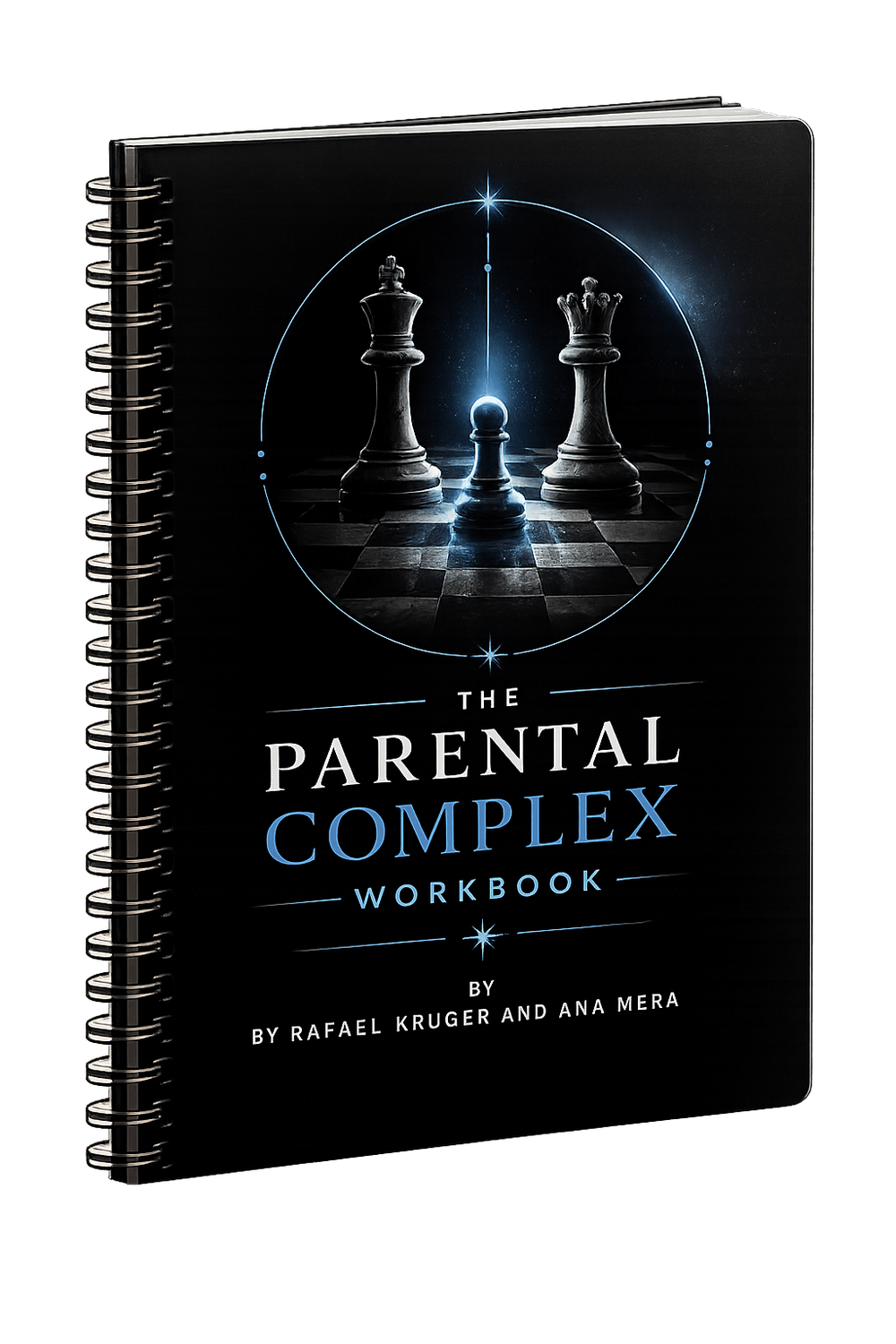
You won't be alone.
During 6 weeks, you can ask me anything via email and I'll personally get back to you.
Bonus #2 -
Effortless - Unlocking The Flow State
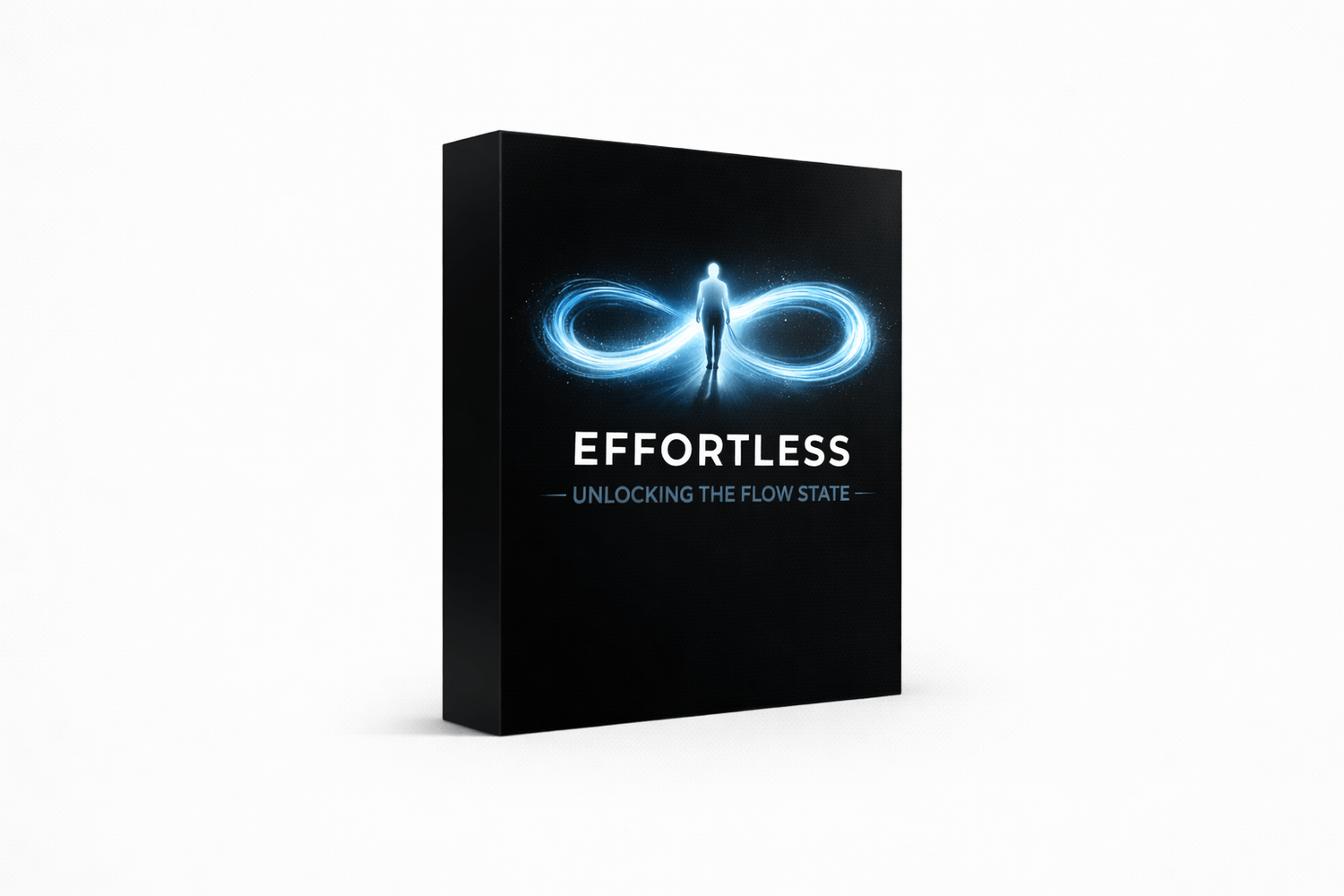
Maybe you're feeling strapped for time.
That's why I'm including the exact system I apply with my clients to beat procrastination and unlock the flow state on command.
I'll teach you exactly how to organize yourself, save time, and remain focused.
Because during flow, we can become 500% more productive.
This Masterclass Costs 1% of A Formal Jungian Analyst Training
Let's explore the options and run the numbers on what it takes to master Jungian Psychology.
You could train formally as a Jungian Analyst, which runs $40,000 to $60,000+ in tuition alone — on top of the mandatory personal analysis at $250 to $300 a week, and four to six years of your life.
Or you could figure it out on your own, spending four or five years working through 50+ books from Jung’s collected works and Marie-Louise von Franz, then logging 3,000+ sessions to slowly piece together a method, the way I did.
Or you could do nothing at all, and stay where you are: stuck, and buried in theory you can’t actually put to use.
Or you could go through this training for 1% of what formal training costs, and start changing your life or apply Jungian Analysis in your very next session:
Join The Jungian Psychology Masterclass
For Only $497
(Split it into 2 payments)
What Clients Say About My Programs:
(Join 400+ Students In Over 35 Countries!)

Avi - From The Jungian Aion YT Channel
"Rafael's work as a Jungian teacher is truly outstanding. His online classes have been a source of transformation for me, providing profound wisdom and insight that helped me delve more into Jungian thought. His exceptional ability to make complex Jungian concepts understandable and relevant, combined with his contagious passion for the material, shines through in every lesson. A truly brilliant and motivating teacher".
Molly (USA)
“The biggest tool he gave me is that I can’t always control the outcome of other people but I can always control my own and see the deeper roots as to why I act the way I do. I was able to apply the techniques in real-time and mend the relationships with family members. I highly recommend him”.

Harry Venice - From Psychology Deep Dive
“Rafael has a deep understanding of Carl Jung’s work and the therapy process generally. He has the ability to break down complex material into practical, relatable content. In his Audacity program, I found his breakdown of Jung’s Personality Types particularly helpful. His masterclass ‘Katabasis’ speaks for itself. It shows someone who not only understands Jung’s work but has gone through the process of individuation. More importantly, over a long period of time I have found Rafael to be a person of integrity who is trustworthy and honest”.
Matt DeFazio (USA)
"Rafael is an amazing therapist, his work has made a massive difference in my life".

Otto Borden (USA)
“Working with Rafael Kruger this past year has been genuinely transformative for me. His mentorship helped me notice and address patterns I had struggled with for a long time—especially my suppressed creative side, perfectionism, harsh self-criticism, and addictive behaviors.
Rafael brings a rare combination of insight, care, and steadiness. He was consistently supportive without being prescriptive, and created a space where difficult self-reflection felt possible rather than overwhelming. I always felt respected, understood, and encouraged to grow at my own pace.
I would wholeheartedly recommend Rafael to anyone seeking thoughtful, compassionate guidance and meaningful personal change”.
Armen U (Dubai)
"He’s very good at being aware, catching things, and steering you in the right direction. I really recommend him if you’re looking for someone competent".
Blake Strait (USA)
“The most helpful tool to help understand myself more. I have a better job, friends, and relationships. Rafael is able to teach at a beginner and entry-level and I definitely recommend it”.

Davi Ferlin (Brasil)
"The Audacity University helped me uncover aspects of my shadow that I wasn't aware of, giving me clarity and tools for self-integration. The approach is deep, yet practical, and unlike any other course I've taken. It's not just about understanding your unconscious, but about applying that knowledge to transform your life. I highly recommend it to anyone serious about personal growth."
Chevonne (Namibia)
“It’s helped me realize a lot of things I suppress within myself, and accept the parts I struggle to accept and to know it’s okay to be the way that I am and to think the way that I think”.
Want More Testimonials?
I Can Keep Going...

Marc Keen (Japan)
“I am working with Rafael in the mentoring program and seeing big changes in some issues that were holding me back for most of life. I feel like I have more direction and understanding of where I am, where I want to go, and the work I need to do to get there - just after just a few sessions. The Katabasis program and the Audacity University has also proven invaluable in the process. I highly recommend his services!”
Lauren (USA)
“I was able to understand what the repressed emotions were trying to tell me or teach me in a way I probably wouldn’t be able to figure out on my own. I learned to listen to the truth of my unconscious mind”.
Nick (USA)
“We came to the bottom of the problem very quickly, he has many pathways and solutions and lets the individual construct his own road to well-being. It’s exciting to look ahead!”
Paul Hennessy (Australia)
“I found Rafael, as I was interested in how he was delivering jungian concepts, at the time I went though a bad break up which was very heavy on me and wanted to know what had happened. Working with Rafael has been transformational, he’s helped me gain a deeper understanding of the patterns that was running my life, which allowed me to consciously choose better decisions. Not only that, I’m very clear on my own purpose and direction my life, and developing much healthier relationships. For the first time I’ve a very clear five year plan, and the life I want to built I’ve also been going through his courses and applying the knowledge in my own coaching practice which has helped get better longer lasting results for my own. When it comes to a Jungian approach and demystifying his work so you can bring it into everyday life he’s resources and knowledge is up there with the best I’ve read or seen.”

Nikollet Biro (Hungary)
"Rafael has been instrumental in helping me reconnect with my lost artistic drive, work through my workaholism, and improve my relationships. During dream analysis his insights shed light on hidden issues, so now I'm better equipped to deal with them. I greatly enjoyed the mentorship and have been living life more freely ever since, giving myself permission to enjoy time for myself and just be a beginner - things that caused me great trouble in the past. I can wholeheartedly recommend working with him!”.

Haron Gomes (Brasil)
“Rafael contributed some very interesting insights to my process of investigating my “shadows”. Perhaps his most valuable contribution was to highlight the importance of not neglecting my artistic/creative side, something I have neglected to give due attention to in the last two years. Paying attention to this and recovering something that has always been so important in my life has, little by little, helped me to face the challenges and obstacles of everyday life in a more positive and hopeful way”.

Tadeusz Maczka
(Canada)
"Working with Rafael has been a transformative experience. He helped me gain clarity on everything from my finances to how I communicate with others. Thanks to his encouragement and expertise, I feel more confident and have a much more positive perspective on my life."

Christine Chai (USA)
“I whole-heartedly endorse Rafael as a life coach and counselor. I reached out to him during one of the most vulnerable periods of my life and I'm genuinely grateful I did. In a relatively short amount of time, he worked with me to address significant life changes (including a move abroad and a career pivot). He has helped me make more authentic choices for my life and see my personal relationships from perspectives I'd never considered before. I can confidently say that although there is still a lot of uncertainty and not all of my problems have been solved, I feel hopeful that my relationships will improve and inspired to keep living my best life. Thank you so much, Rafael!”

Jan Sykora (Czech Republic)
“I always thought of the shadow as something purely dark, bad, evil, but in Katabasis I discovered we hide in the shadow everything that is unacceptable to us - anger, signs of weakness or the ability to stand up for ourselves (if we learned to perceive it as a bad thing). This was a major turnover for me and with Rafael's gentle guidance I finally moved from a stuck place. He mentions lot of practical examples of how the shadow can manifest, so you can better imagine it in your own life. I never understood why in the end I always fall into self-sabotage. I felt like I just could not help it - like there was an invisible force above me, guiding me against my dream life. Now, I feel finally free".
About the creator: I’m Rafael Krüger, Jungian Psychology Specialist, author, and creator of the Audacity University.
For the past 9 years, I’ve been providing mentoring and high-end courses, reaching over 400 mentees and students in 35+ countries.
-Postgraduate Diploma in Analytical Psychology
-Postgraduate Diploma in Depth Psychology
- Mod at r/Jung and r/ ShadowWork

FAQ
The curriculum is composed of pre-recorded lessons paired with extra reading material.
No! Everything is taught with a simple and engaging language that anyone without psychological knowledge can follow, starting from the basics.
You'll have 2 years of access.
Rafael Krüger - Live an Audacious Life